Bahasa melayu
 中文
中文















TCM for Postpartum Hair Loss: Personalized Solutions to Restore Your Healthy Hair
From Loose Strands to Widening Part: You're Not Alone
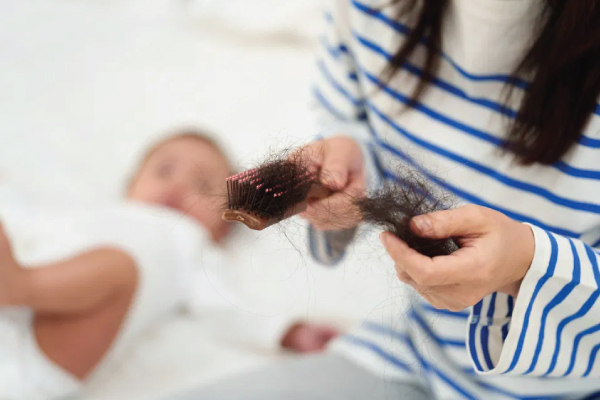
"I’m afraid to wash my hair. Every time I do, it feels like I’m losing handfuls." Many new mothers experience this sudden and alarming change within a few months of giving birth. What begins as minor shedding can escalate into visible thinning, undermining confidence and making them feel prematurely aged.
This isn’t just cosmetic. Postpartum hair loss often reflects deeper imbalances caused by hormonal shifts, sleep deprivation, stress, and poor nutrition. When your body is exhausted from nourishing a new life, your hair’s vitality is often the first to suffer.
Understanding the Root Causes: Western vs. Chinese Medicine Perspectives
Western View: Hormonal Shifts Trigger Telogen Effluvium
During pregnancy, estrogen levels surge and extend the hair’s growth phase, making it appear fuller. But after childbirth, hormone levels plummet. This sudden drop causes many hairs to enter the resting (telogen) phase simultaneously, leading to excessive shedding 2 to 6 months postpartum. This condition, known as postpartum telogen effluvium, usually resolves within a year.
Other aggravating factors include nutritional deficiencies (iron, zinc, B vitamins), thyroid dysfunction, chronic stress, and sleep disturbances. These can prolong or intensify hair loss.
TCM Perspective: Blood Deficiency and Kidney Energy Depletion
According to TCM, "Hair is the surplus of blood" and "Kidneys govern the hair." Hair reflects the state of one’s blood and kidney essence (jing). After childbirth, women are often depleted in both. Common postpartum TCM imbalances include:
- Qi and Blood Deficiency: Blood loss during delivery and poor postpartum digestion lead to insufficient nourishment of the scalp and hair roots.
- Kidney Jing Depletion: The birthing process drains vital kidney energy, weakening hair follicles and resulting in fine, brittle strands.
- Liver Qi Stagnation: Emotional stress and suppressed emotions hinder blood flow to the scalp, exacerbating hair thinning.
- Blood Heat and Wind-Dryness: Women with warm constitutions may experience scalp inflammation and itchiness, increasing shedding.
Every woman’s constitution is different. Effective treatment must be personalized.
Healing from Within: Why TCM Offers Long-Term Results
Postpartum hair loss is a signal from your body, not a symptom to suppress. TCM works by restoring balance rather than masking the problem. Instead of using external solutions like wigs or temporary treatments, TCM nurtures your health from the inside out.
Herbal Food Therapy: Formulas like Ba Zhen Tang and Si Wu Tang are paired with nutrient-dense ingredients such as black sesame, red dates, goji berries, and black beans to rebuild blood and strengthen kidneys.
Dietary Suggestions: TCM-friendly daily foods include black fungus, walnuts, pig liver, and millet, which can be easily integrated into soups or porridges.
Acupuncture Therapy: Stimulating key points like Baihui, Fengchi, Zusanli, and Ganshu improves scalp circulation and revitalizes dormant follicles.
Moxibustion (Heat Therapy): Particularly effective for women with cold or deficient constitutions, moxibustion enhances immunity and promotes blood flow to the scalp.
Zi TCM Healthcare's: Personalized Plans That Actually Work
At Zi TCM Healthcare's, we understand that every mother is unique. That’s why our solutions aren’t generic. We offer end-to-end tailored care.
One-on-One Consultation: Experienced physicians use the four diagnostic methods (observation, listening and smelling, questioning, and palpation) to identify your type of hair loss.
Customized Herbal Prescriptions: All-natural formulas, free of hormones or additives, target your root imbalances, whether they’re blood deficiency, liver Qi stagnation, or kidney weakness.
Scalp-Focused Acupuncture: Micro-needling and acupuncture are used to stimulate scalp points, improve microcirculation, and activate follicle regeneration.
Herbal Scalp Masks and Moxibustion: Tailored based on your needs, these therapies regulate scalp temperature, reduce inflammation, and improve absorption.
Progress Monitoring and Adjustments: Treatments evolve based on your body’s response, ensuring consistent progress and visible results.
We do not rely on gimmicks. Our time-tested treatments focus on professionalism and real results.
Real Transformation: From Hair Loss to Hair Confidence
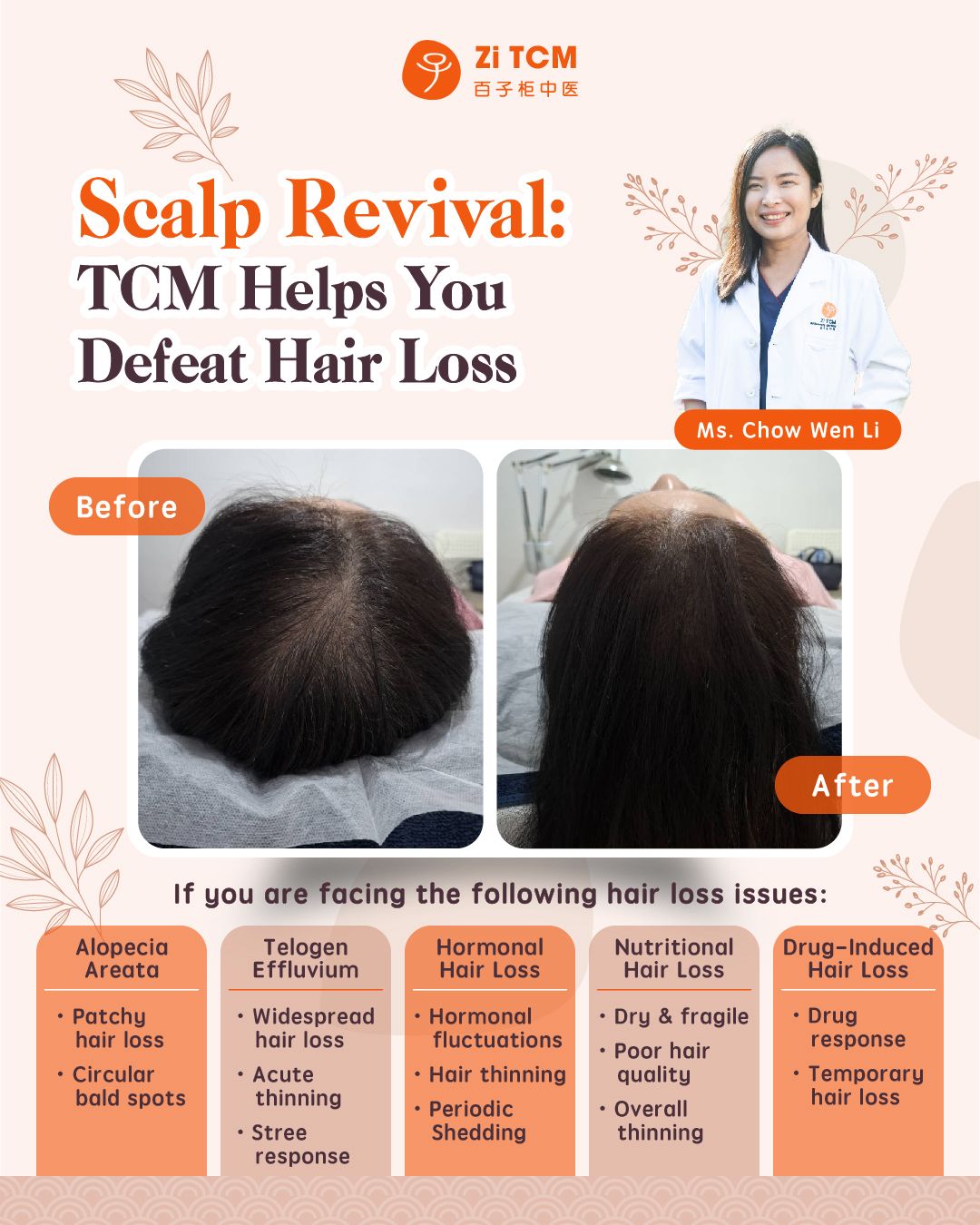
Ms. Y, a working mother four months postpartum, was experiencing excessive hair loss due to late nights and emotional strain. After a diagnosis of Qi and blood deficiency with liver stagnation, she began a TCM plan combining herbal decoctions, scalp acupuncture, and dietary adjustments. Within three months, she reported less oiliness, a narrower hair part, and better sleep. Most importantly, her confidence returned.
Lifestyle Support to Maximize Results
Food Choices: Boost your intake of protein, iron, zinc, and B vitamins through tofu, black sesame, lean meats, eggs, and red dates.
Sleep Hygiene: Aim to sleep by 11 p.m. and take a 20 to 30 minute midday nap. Good sleep is essential for liver and blood recovery.
Scalp Care: Always dry your hair after washing. Use mild shampoos without silicone and massage your scalp to stimulate circulation.
Acupressure Routine: Spend 3 to 5 minutes daily massaging points like Baihui, Fengchi, and Sanyinjiao to promote energy flow and relax your mind.
FAQs
How long does postpartum hair loss last?
Hair loss peaks between 2 to 6 months after delivery and resolves naturally by the baby’s first birthday. If shedding persists beyond 9 months or involves scalp irritation, seek professional assessment.
How long does it take for TCM to show results?
Initial changes like reduced scalp oiliness and improved sleep often appear within 3 to 4 weeks. For best results, a 3-month continuous regimen is recommended to restore follicle health.
Is it safe to use herbal medicine while breastfeeding?
Yes. At Bai Zi Gui, we use gentle, natural herbs that are safe during lactation and will not affect milk quality or your baby’s health.
Why did my hair loss worsen after taking tonics?
Over-supplementation can aggravate heat or dampness if your constitution isn’t accurately diagnosed. Always consult a TCM practitioner before self-medicating.
Is scalp acupuncture different from regular acupuncture?
Yes. Scalp acupuncture focuses on points associated with the nervous system and scalp blood flow. It uses fine needles and is nearly painless, making it ideal for treating hair loss and stress-related conditions.
Now Is the Time: Reclaim Your Hair and Confidence
Hair loss is your body’s way of asking for care, not a cosmetic flaw. With the right TCM plan, postpartum recovery can be a transformative journey. It’s not just about hair. It’s about your vitality, your confidence, and your overall well-being.
Book a personalized consultation at Zi TCM Healthcare's today. Let us help you regain strong, healthy, and radiant hair from the inside out.